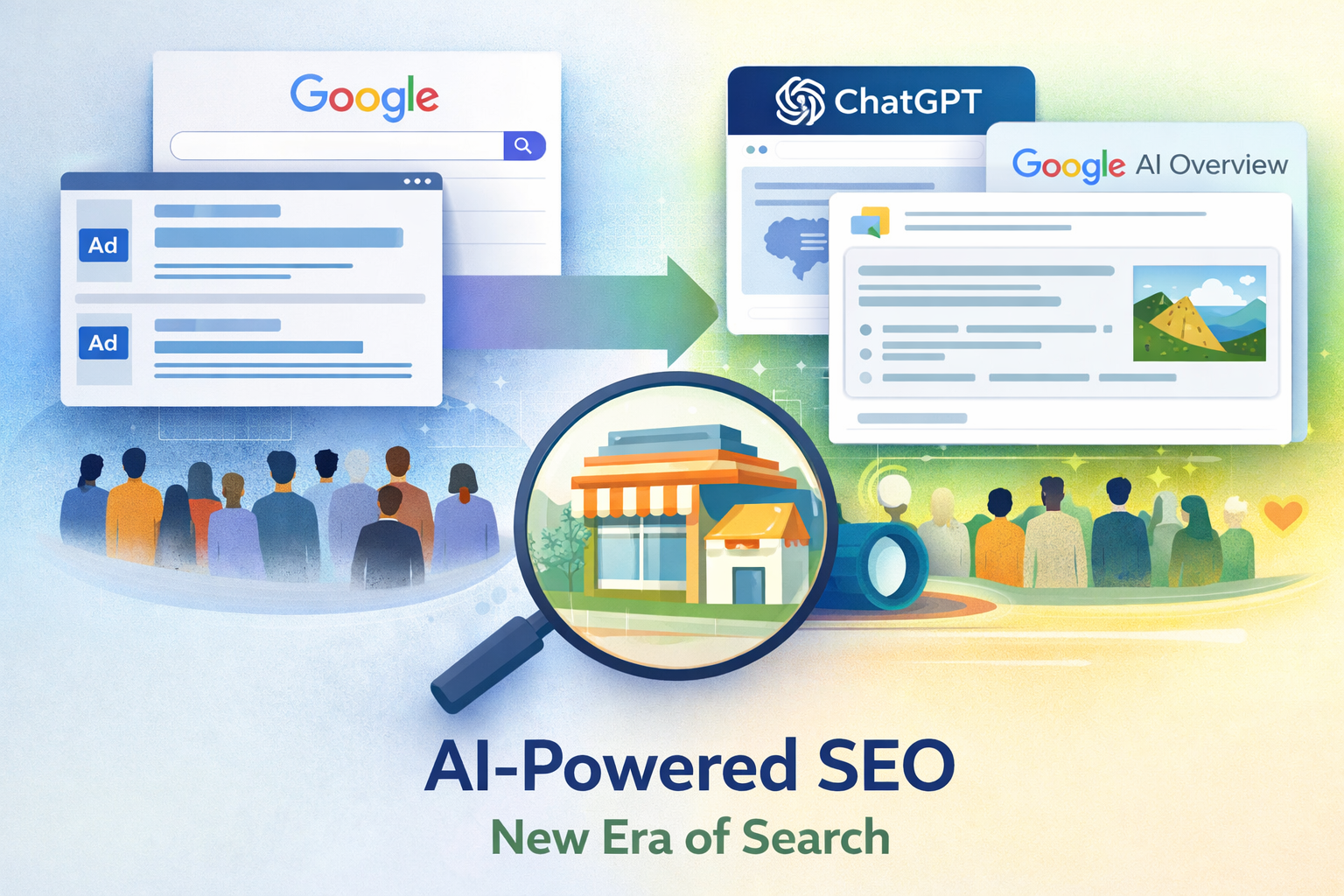
Search is not broken. It is just doing something different now. And most businesses are still optimizing for a version of it that no longer exists.
What AI-powered SEO actually means in 2026
For most of the past decade, SEO meant one thing: ranking on Google. You identified the right keywords, built content around them, earned backlinks, and waited for traffic. That framework still has a role to play, but it no longer describes the full picture.
Today, a growing share of people start their research in platforms like ChatGPT or Perplexity instead of traditional search engines. Even when they do use Google, many users rely on AI Overviews at the top of the results page and never scroll further. As a result, AI-driven discovery is no longer marginal. According to recent data from UpGrowth, AI platforms now account for approximately 12% to 18% of total referral traffic, with growth rates exceeding 130% year over year. ChatGPT alone represents more than half of all AI-referred traffic globally, reinforcing its role as a primary gateway for online discovery.
AI-powered SEO is the practice of optimizing your digital presence not just for traditional search engines, but for every AI system that now plays a role in how people find information and make decisions. That includes Google’s AI Overviews, ChatGPT Search, Perplexity, and whatever comes next.
The numbers that explain why this matters now
A few data points capture the scale of what has shifted.
AI-driven discovery is no longer marginal. Platforms like ChatGPT and Perplexity are capturing a growing share of research behavior, while Google increasingly answers queries directly through AI Overviews. As a result, fewer users are clicking through to websites, but those who do arrive tend to have higher intent.
Content structure also plays a direct role in whether AI systems cite your page. An analysis of LLM citation behavior found that 44.2% of citations come from the first 30% of a page’s content, highlighting how strongly AI systems favor pages that surface answers immediately.
Less traffic, but significantly better quality. That changes what you should be optimizing for.
How AI search systems decide what to cite
Understanding the mechanics behind AI citations is where most businesses have a gap. It is not random, and it goes beyond traditional ranking factors.
AI systems retrieve a wide pool of potential sources, but only cite a small fraction of them. In many cases, models like ChatGPT surface only around 15% of the pages they evaluate, meaning the majority of technically accessible content is never shown to the user.
What separates cited content from ignored content is not just relevance, but perceived authority.
Signals such as consistent brand presence across the web, depth of expertise on a topic, and clarity of information all influence whether a source is selected. Being technically accessible is the baseline. Being recognized as a credible source is what determines whether you are included.
This is the shift from ranking to selection. And most content today is not built to be selected.
Two types of content that work differently
One of the most useful ways to approach content in this environment is to separate what gets cited from what drives visits.
Content designed to be cited by AI
This is content built to answer specific questions clearly and directly. FAQ sections, structured headings, and concise explanations at the top of the page signal that your content is a reliable source.
This type of content may not generate clicks, but it places your brand at the exact moment someone is forming an opinion.
Most AI-generated answers are triggered by informational intent. If your content targets this type of query, clarity and structure matter more than length.
Content that drives visits
Not everything should be summarized.
Deep analysis, proprietary data, and specialized expertise cannot be fully captured in a short answer. This is where strong content earns clicks from users who need more context.
The practical implication is that your content strategy probably needs both types. Knowing which of your current pages should be optimized for citation versus which should be pulling people deeper into your site is part of what a good digital visibility audit helps clarify.
Search intent is the variable most businesses underestimate
AI systems are built to understand intent, not just keywords.
Informational queries dominate AI-generated responses. Commercial queries appear less frequently, and transactional queries even less. This concentrates AI visibility in the research phase of the customer journey, where perception is shaped.
There is also a pattern in how conversations unfold. Initial questions tend to trigger broader information retrieval. Follow-up questions rely more on context. If you want to be visible, you need to win the first question, not the clarification that comes after.
What your team needs to actually do
Most of what needs to change is not technical. It is strategic and organizational.
Understand where you stand today
Search ChatGPT and Perplexity for the questions your customers ask most. Look at whether your brand appears, whether you are cited as a source, and whether what gets said about you reflects how you want to be perceived. This is your baseline. Our audit and diagnosis service is built around exactly this kind of visibility assessment, giving you a clear picture of where you are visible and where you are not before making any changes.
Build consistent expertise signals across platforms
LinkedIn is the most cited domain for professional queries across AI Overviews, ChatGPT, Microsoft Copilot, and Perplexity, according to Profound’s March 2026 data. Your presence on professional platforms, the content you publish, and the mentions you earn from credible external sources all contribute to how AI systems perceive your authority. This is not a one-channel problem.
Build your team’s AI capability alongside your content strategy
AI-powered SEO is not a set-it-and-forget-it change. The platforms evolve, the citation patterns shift, and the organizations that adapt fastest are the ones with teams that genuinely understand how AI search works, not just teams that have access to tools.
Our AI Business Training programs help marketing and commercial teams build the practical knowledge they need to make good decisions in this environment, from understanding how to structure content for AI citation to using AI tools to improve workflow efficiency across the team.
For organizations that want strategic guidance on how to approach this more broadly, our AI consulting work and Adaptive Search Everywhere Optimization service are designed to help you build a presence that performs across every environment where your customers now look for information.
Frequently Asked Questions
What is AI-powered SEO?
AI-powered SEO refers to optimizing your digital presence for AI-driven search environments, including Google AI Overviews, ChatGPT Search, and Perplexity, in addition to traditional search engines. It goes beyond keyword ranking to focus on being recognized as an authoritative, credible source that AI systems choose to reference when generating answers.
Does traditional SEO still matter in 2026?
Yes. Technical SEO foundations, site structure, quality content, and credible backlinks remain important because AI systems still rely on them to evaluate and index content. The difference is that traditional SEO alone is no longer sufficient. Strong technical foundations need to be paired with a broader strategy for building authority across AI search environments.
How do I get my business to show up in ChatGPT and Perplexity?
There is no direct submission process the way there is with Google Search Console. Visibility in AI platforms comes from building a strong, consistent presence across the web, including your website content, LinkedIn, external publications, and mentions from credible sources. Content that directly answers specific questions, structured with clear headings and FAQ schema, tends to perform best. We cover this in more detail in our post on how to show up in ChatGPT and Perplexity.
How do I measure succes?
Traditional metrics like clicks and rankings are no longer complete indicators of visibility. Track direct visits and branded search volume as signals of recognition. Monitor whether your brand appears as a cited source in AI-generated answers for your most important topic areas. Conversion rates from AI-referred traffic are also worth tracking separately, given how differently that audience tends to behave compared to traditional organic visitors.
If you want to understand how your business currently appears in AI search environments and what a practical path forward looks like, the WSI team can help you evaluate your current visibility and define the right next steps. Start the conversation here.